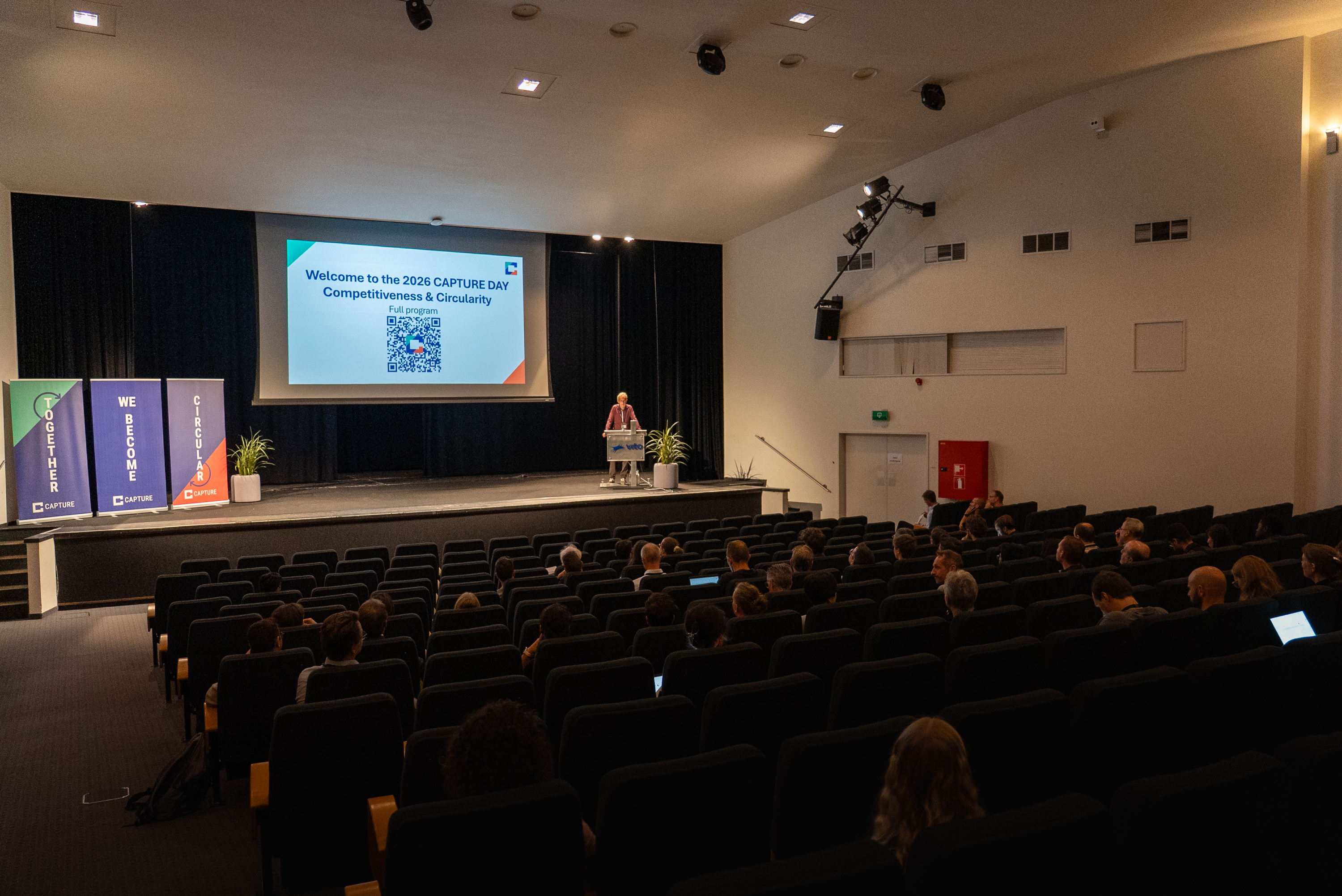
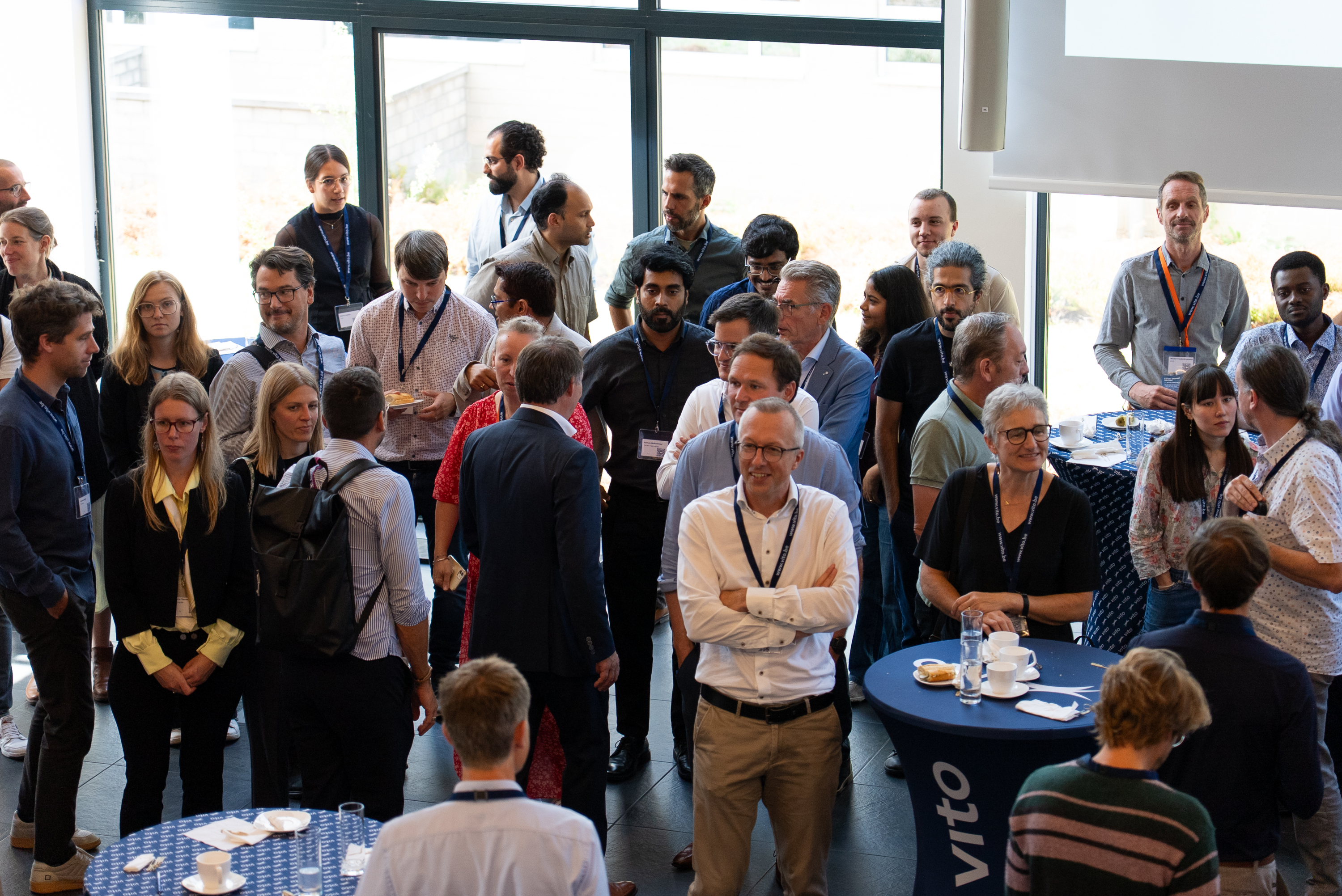
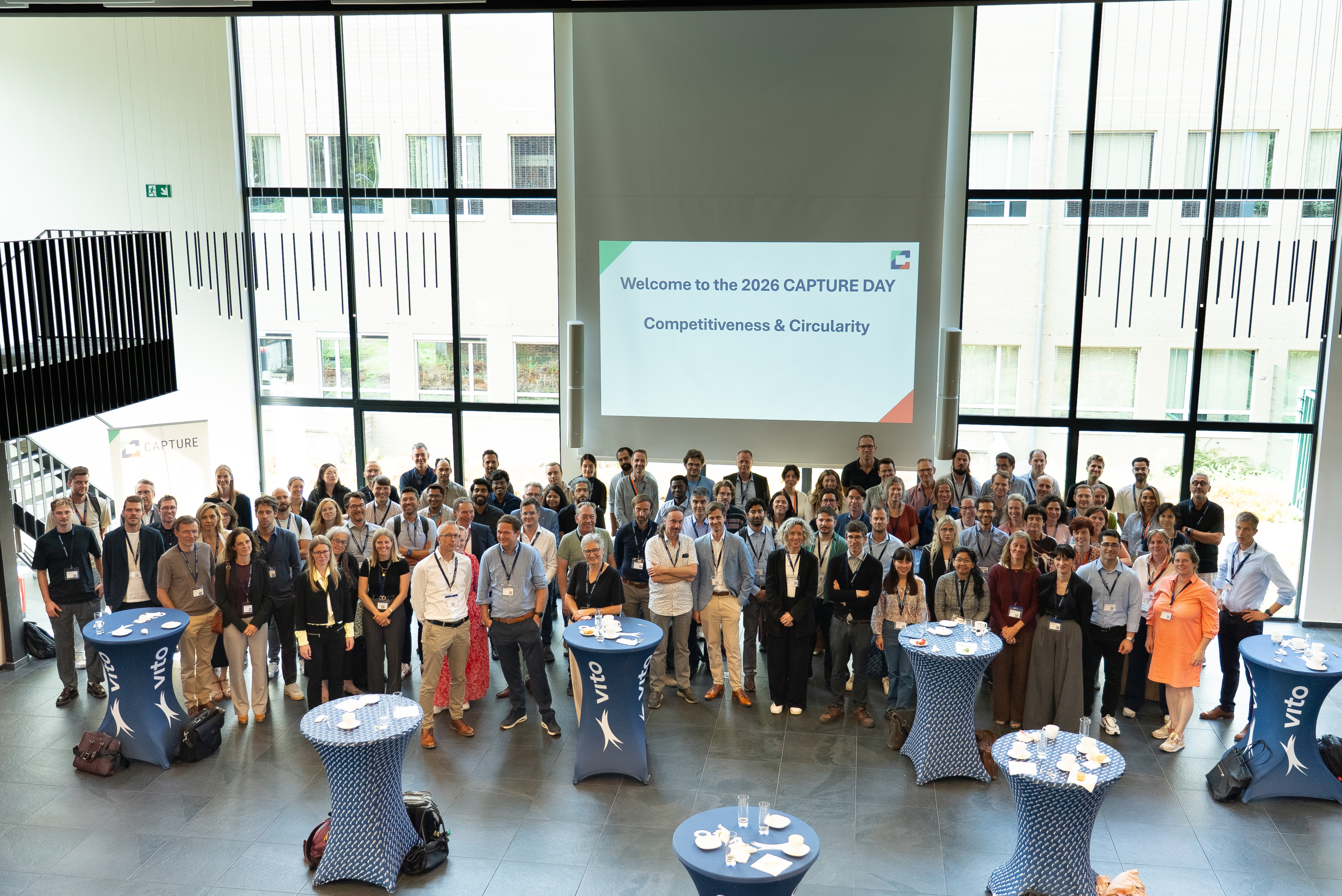
A key theme running through the CAPTURE Day 2026 was the growing tension between circularity and competitiveness. In the short term, investments in circular technologies, infrastructure, and business models are often perceived as added costs that can put companies at a competitive disadvantage. Economic pressure and market uncertainty can therefore discourage organizations from making the investments needed to accelerate the transition towards a circular economy.
However, this apparent trade-off risks between circularity and competitiveness are undermining Europe's long-term economic strength. Delaying investments today slows down the development, scaling, and market uptake of circular solutions that will be essential in the future. On the one hand, circularity will be needed to guarantee the availability of carbon as a material resource in a low-fossil economy and hence is an important enabler of strategic autonomy. On the other hand, regions are rapidly advancing their circular industries through targeted investments, supportive policies, and large-scale deployment. This creates a real risk that European companies will lose their leading position in emerging circular value chains and become dependent on innovations and technologies developed elsewhere.
The evolution of the electric vehicle market illustrates this dynamic well. While Europe has traditionally been a leader in automotive manufacturing, the delays in scaling new technologies and adapting industrial ecosystems have allowed competitors from other regions to gain significant market shares. This example demonstrates how prioritizing short-term competitiveness can ultimately weaken long-term competitiveness if it hinders timely investment in transformative industries.
During the CAPTURE Day, participants explored how to break this paradox. The morning sessions focused on the foundations needed for a thriving circular economy: better information sharing across value chains, well-functioning circular markets, and closer alignment between policy objectives and a portfolio approach to innovation, balancing incremental improvements with breakthrough innovations. That balance matters because breakthrough innovation rarely pays off overnight: it typically takes 10 to 15 years to move from invention to real market impact, and building that timeline into expectations is itself part of a sound innovation strategy. Discussions made clear that companies can only commit to confident, long-term investment when it's backed by transparent market signals, reliable data, and a coherent regulatory framework.
In the afternoon, attention shifted towards concrete pathways for implementation. Participants discussed how scientific knowledge can be translated into industrial impact through effective valorization strategies, how pilots can help de-risking innovation, as well as how promising technologies can move beyond laboratory and pilot stages towards commercial-scale deployment. A recurring point: accelerating pilot upscaling and strengthening academia-industry collaboration are what will let innovative circular solutions reach the market faster and at greater scale.
Overall, the CAPTURE Day made one thing clear: competitiveness and circularity aren't conflicting goals. Europe's long-term competitiveness will increasingly depend on its ability to build, scale, and industrialize circular solutions, starting now.